



Why I changed my mind about mascots in habit apps
I used to be dead against mascots in habit apps. Then I built one.
What bothered me was the deal some apps ask you to make: do your habits and the little creature stays happy. Miss a few days and now there’s something on your phone looking disappointed in you. If I’ve had the sort of week where I can’t get out for a walk, the last thing I need is a small animal to apologise to.
There’s a reason it works as a game. Feeding and looking after a pet is the point of Bandai’s Tamagotchi. The team behind Finch gives that idea a self-care purpose: doing something for yourself gives your bird energy to go on an adventure. I can see the appeal. While building Abby Habits, I kept coming back to a different question: what should the character do for you when you haven’t done anything for it?
A sad fish can make you look away
In 2006, a team at Siemens Corporate Research built Fish’n’Steps, a game in which your step count affected the growth and mood of a virtual fish. Some people found it motivating. Others stopped looking when they expected their fish to be unhappy. As one participant put it: “I didn’t want to check on it, because I knew it was going to be sad.”
It was a small study, but that line gets at my worry. The feedback that makes a good day feel rewarding can make the app harder to face on a bad one.
There’s evidence the other way too. In a small experiment by Byrne and colleagues (2012), teenagers whose virtual pet gave both positive and negative feedback were twice as likely to eat breakfast as those who got positive feedback alone or had no pet. That tells us something about what people did during the study. It doesn’t tell us whether guilt drove the result or whether the behaviour lasted.
A character can be on your side
A study by Bickmore, Gruber and Picard (2005) helped me put words to the difference. They tested two versions of a virtual exercise adviser called Laura. The version that used empathy and small talk was better liked, and people were more willing to keep working with her. The two versions showed no clear difference in physical activity. I take that as evidence that how a character treats you can change how it feels to work with it. Whether it changes what you do outside the app is a separate question.
There’s also a reason to think kindness after a setback can be useful. In one experiment by Breines and Chen (2012), people encouraged to respond to a failed vocabulary test with self-compassion spent longer studying for a second attempt. That’s a long way from proving a friendly mascot helps people build habits. It does challenge the idea that being hard on yourself is what makes you try again.
What I built into Abby
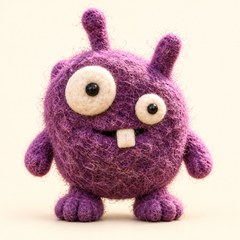
Abby fills with colour as you log the things you’ve done. She can celebrate with you. When you miss a day, she’s still there, quite content. There’s nothing to feed and nothing to make up to her. If you’d rather she only spoke when tapped, or you’d rather not see her at all, you can choose that in Settings.
The more useful part is deciding in advance what a habit looks like on a day when the wheels come off. If the plan is to read ten pages, the rough-day version might be one. Abby Habits lets you set that smaller version ahead of time. Research by Sharif and Shu (2021) found that building some room for setbacks into a goal helped people persist after missing a target. Their studies didn’t test smaller versions of habits. For me, the idea is to practise adapting a plan when life changes, so one rough day doesn’t have to decide what happens next.
That’s what changed my mind. A character can make the return feel a little warmer. I’d judge Abby by what happens when someone opens the app after a rough week. Can they find a next step that fits the day they’re actually having? If they can, she’s doing the job I built her for.
I’m Paul Calver, a Precision Nutrition Master Health Coach and iOS developer. I built Abby Habits. I’ve also written about what happens when a habit streak breaks.
Sources checked 11 November 2026.